
Markets
Utility Markets

Low-Cost Spinning Reserves:
For utilities, the H2PWR System can operate as a dispatchable DG asset within the distribution network that can provide low-cost spinning reserves.
Spinning reserves are rapidly becoming an essential part of the operations of utilities, as they take on the complex task of adding so many non-dispatchable Distributed Generation (DG) assets (such as PV solar) on the consumer-side of the meter.
Spinning reserves provide a form of “stand-by” power to the grid. When the grid loses a critical source of generation, whether it is a large fossil-fuel plant or a wind-farm, spinning reserves must exist to be dispatched immediately to provide instantaneous back-up to that lost generation capacity.
The North American Electric Reliability Corp. – “NERC” – has strict compliance guidelines for meeting spinning reserve requirements, embodied in NERC BAL-002-3, which states that the “responsible party” (the utility of record) must provide enough operating reserve to meet the “Most Severe Single Contingency” requirements … meaning the distribution system can ensure power continuity in the event that the single largest power plant in a given service area were to fail – for whatever reason.
The H2PWR demonstrated that capability in September of 2024 at the Superlab 2.0 national event, hosted by the National Energy Technology Lab (NETL). You can read the details in the reports included in the White Paper section.
DISPATCHABLE POWER (Operator Dispatched)
The H2PWR Systems are designed to be dispatchable. They can provide spinning reserves, by maintaining a very low spinning ratio and they can “ramp up” extremely rapidly, if that “microgrid capacity” is required (during power outages or during “peak load” episodes).
In short, these are the OBJECTIVES of the RPW Evaluation Process:
Identifying key “Hydrogen-to- Power” Characteristics: Safety, Carbon Footprint, Space and Installation Requirements, Land Use Limitations
Valuing on-site H2 production versus off-site procurement (sourcing) and storage (feedstock supply chain optimization)
Identifying Obstacles to Acceptance and Adoption of Hydrogen
Understanding Carbon Intensity – Distinguishing the fundamentals of Gray, Blue and Green Hydrogen. We delve into the unique space, clean water and capital requirements of producing green hydrogen on-site: determining the feasibility of that approach.
Installing, Commissioning, Operating, and Maintaining Hydrogen- Powered Microgrids: This evaluation and assessment entails developing H2PWR workforce training programs, for adding any specialized skills needed either on-site or within the sphere of contractors who will be responsible for the H2PWR systems.
Evaluating YOUR criteria to determine if your site needs:
RPW’s plans include introducing a H2PWR model that has attributes of a Combined Heat & Power (CHP) plant. The heat output can be used for chillers and facility heating, for instance. If you are a facilities manager, or a community planner, this capability may be of interest in the future.
Load-Following Capability & Fast Ramp-Up Rates:
The H2PWR System has an exceptionally low-turn down ratio and a fast ramp-up rate. It means that H2PWR System can match its output with the local load demand it is supplying electricity to. This is achievable in the non-steady state and microgrid modes. (For more details of operational characteristics, please see the report about the Superlab 2.0 Grid Simulations – 5 federal labs – September 2024. In the White Paper Section.)
Point-of-Common Coupling (PCC)
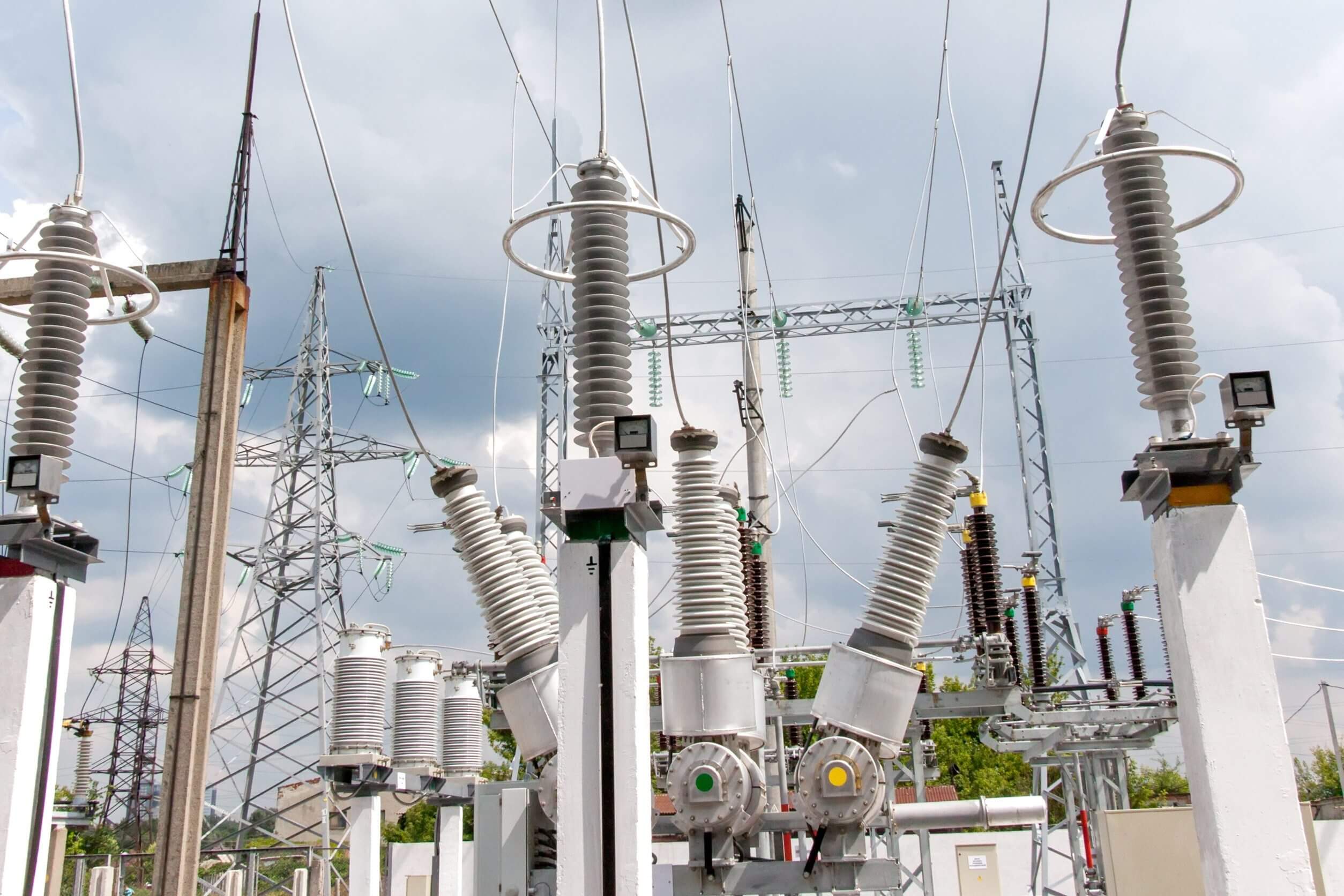
The H2PWR Systems – currently sized up to 1 megawatt – can be deployed and interconnected at the feeder level; as a DG asset, it can also be interconnected at the secondary bus level of a distribution substation. This critical place of grid integration is called the PCC.
For our purposes, the PCC is the physical spot where locally generated power is integrated into the “bulk” power grid. Generally speaking, this locally produced power is considered distributed generation (DG) — it can be derived from either intermittent sources, such as PV solar arrays and wind turbines -- or it can be base-load (24/7) power. Either type of electricity may be injected into the distribution grid (subject to interconnection agreements with the host distribution utility).
As discussed, the H2PWR System is capable of both 24/7 steady state operation – or – it can be dispatched by the grid operator. It can ramp-up extremely fast – and can thereby perform seamlessly as a microgrid, providing nearly instantaneous “back-up” power during a power outage. The integration of H2PWR power, in both grid-connected and islanded modes, is monitored and controlled at the PCC.

Base-Load Power (also called “steady-state power”):
The H2PWR System is capable of 24/7 steady-state generation, generally unaffected by weather or seasonality.
Fuel Efficiency
Running on natural gas (as the feedstock), it is estimated that the fuel efficiency is about 2 ½ times that of a standard NG turbine… that is, it can produce that same power using about a third as much fossil-based feedstock.
Equipment Longevity
Due to its high efficiency, its tightly coupled mechanical systems and its advanced power controls, it is estimated that the life of the Solid Oxide Fuel Cell (SOFC: the single most expensive component of the H2PWR System) can be extended by better than seven times the average useful life. (Source: NETL, in cyber-physical testing conducted over several years.)
Black-Start Capability
Interconnecting widely distributed, operator-dispatchable DG assets located at strategically important substations and nodes can
provide “black-start” capability to the bulk grid, when it has to resume operations after a black-out. Think of dispatchable, base load DG H2PWR Systems as a “jump” to a car with a dead battery.
